Community Management

Expert Community Management resources for professionals. Explore the history, strategies, and practical guides to building online communities from a 25-year industry veteran.

A split composition header image contrasting two different types of community. On the left half, under a banner that reads "THE SMALL ROOM: DEPTH & CRAFTSMANSHIP," five diverse professionals are seated around a round table in a warmly lit, wood-paneled library with a fireplace, engaged in a deep, focused discussion. A bright beam of light emanates from this room. The right half, under a banner that reads "THE CROWD: VOLUME & NOISE," shows a blurred digital landscape filled with countless faceless avatars and an overwhelming number of blue and purple notification icons for likes, comments, and messages. The two halves are separated by a glowing visual fissure, with the light from the small room piercing into the digital crowd.

Why Your “Tiny” Group is Actually Your Biggest Lever

The biggest mistake leaders make is assuming a small community is “low maintenance.” It’s actually the opposite. In a large community, the crowd regulates itself through sheer mass; in a small community, the founder or manager is the “Chief Vibration Officer.” You are the one setting the tempo.

If you have 40 members, you should know their names, their current projects, and their last three frustrations. If you don’t, you aren’t managing a community… you’re just hosting a small, disorganized thread.

The secret to high-value small groups is structured vulnerability. You have to create a space where people can admit they don’t know something. In a group of 10,000, nobody wants to look stupid. In a group of 20, everyone is willing to be real. That “realness” is the only thing people will actually pay for or stay for in 2026.

Stop trying to build a kingdom. Start trying to build a hearth.

read more...
The Ghost Town Myth: Why You Can’t Post Your Way Out of a Dead Community

The Ghost Town Myth: Why You Can’t Post Your Way Out of a Dead Community

The Phoenix Strategy is not for the faint of heart; it requires the courage to dismantle what you or your predecessors built. But you must remember that a community is a campfire, not a monument.

A monument is static and cold; it is designed to be looked at. A campfire is warm and dynamic; it requires constant fuel to stay alive. If your fire has gone out, do not just stand there and describe the flames you used to have… clear out the ash, gather some new wood, and strike a new match.

read more...
Stop Calling It “Just Modding”: Why Community Creation Is Product Design

Stop Calling It “Just Modding”: Why Community Creation Is Product Design

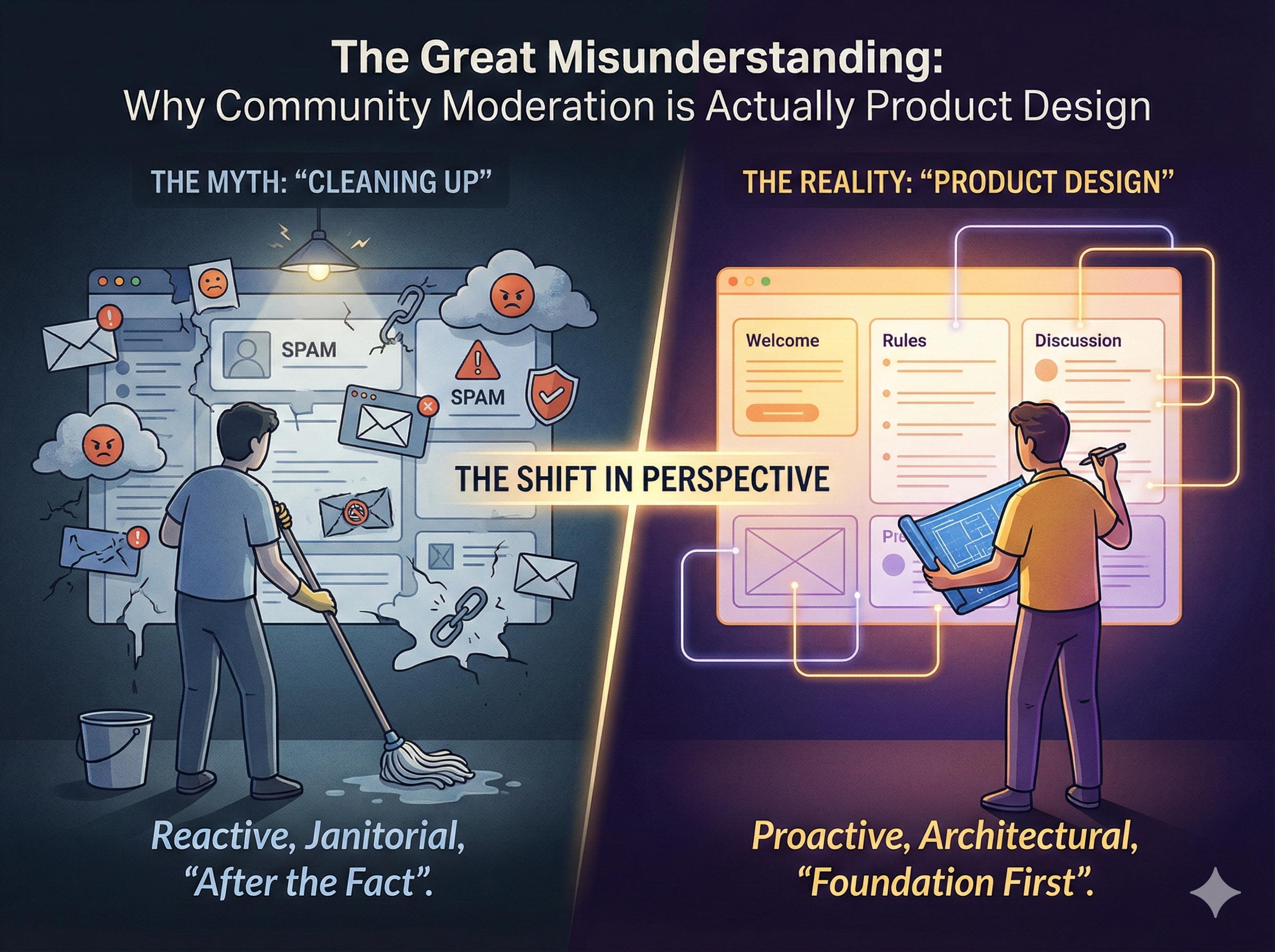
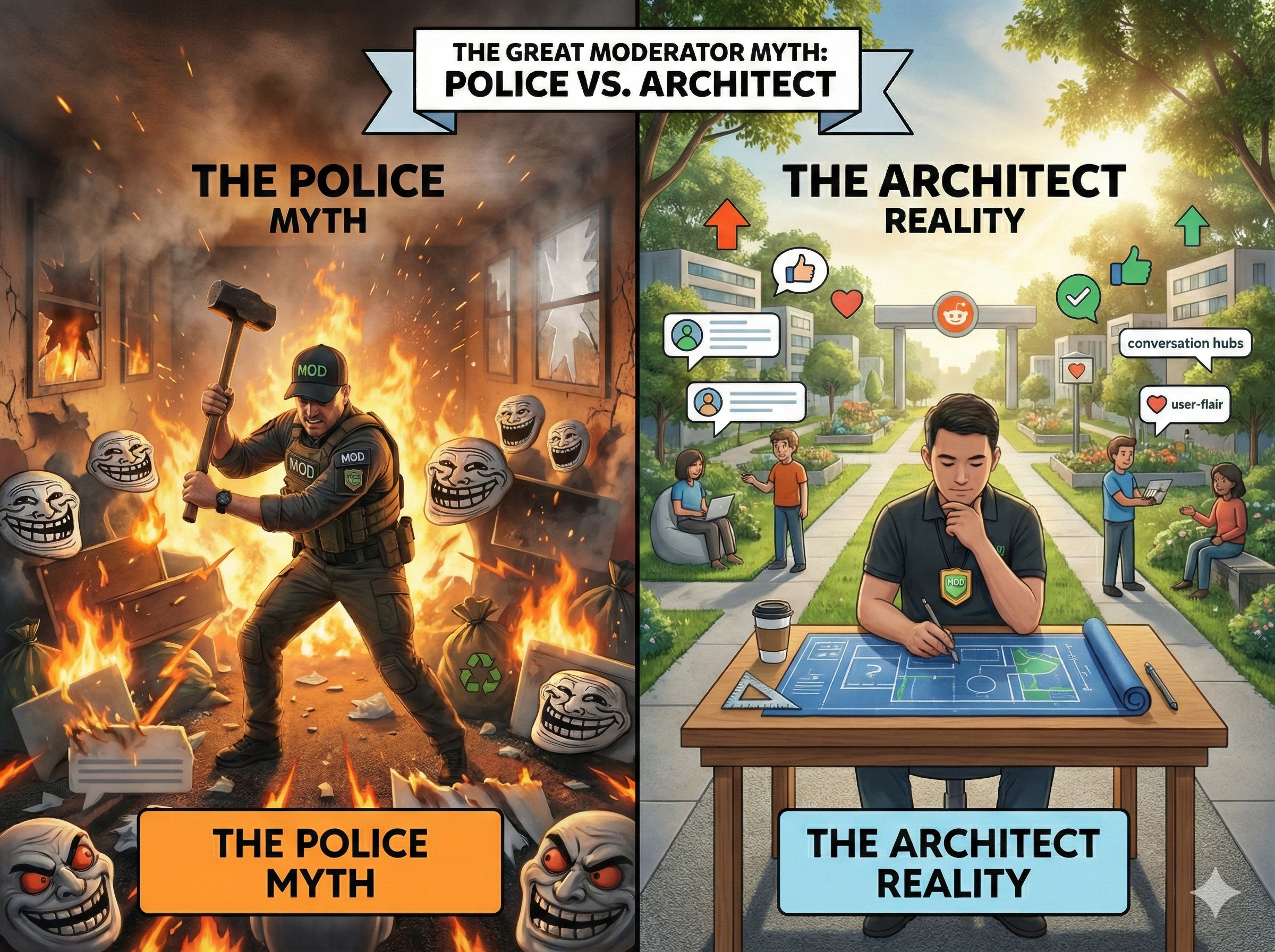
Community moderation is not the “clean-up crew” of the internet. It is the intentional design of human behavior through digital structures. Every rule you write is a feature. Every banner you upload is an interface choice. Every “first post” is a prototype.

Stop waiting for the community to “happen” and start designing the conditions for its success. The “delete” button is the least powerful tool in your kit. Your most powerful tools are the ones that build, not the ones that remove.

read more...

Your Host

Meet David DeWald

David DeWald is a pioneering online community professional with over 25 years of experience building, managing, and evolving digital communities of all sizes—some reaching millions of members. Since the late 1990s, he has partnered with diverse organizations and businesses to establish impactful online presences that foster engagement and growth. David is widely respected among his peers for his deep expertise in community strategy, engagement, moderation, and advocacy development. Beyond managing communities, he actively contributes to the industry through thought leadership, including public speaking, and blogging, sharing actionable insights to elevate the practice of Community Management globally.

Mastodon

David DeWald

Community Professional at Ciena